Ongoing Coverage:

Tagged: energy

Pages

Environment & Science
3:47 pm
Tue May 29, 2012

Michigan business group opposes new mandate for renewable energy

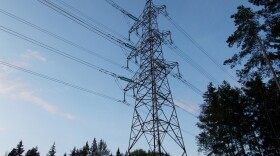
Credit user vaxomatic / flickr

Detroit Regional Chamber of Commerce officials said today they opposed a ballot initiative aimed at creating a new renewable electric energy standard for the state, according to MLive. The state is currently working toward a standard that calls for generating 10 percent of the state's electricity from renewable sources by 2015.

The ballot initiative seeks to bump up that mandate to 25 percent by 2025. From MLive:

Chamber officials said any changes to Michigan’s renewable energy standard should wait until the current standard has been fully evaluated in three years.

“Michigan is already on an intelligent and affordable clean energy path because of the 2008 energy law, which passed the Legislature with overwhelming bipartisan support, said Chamber president and CEO Sandy K. Baruah in a statement.

The Michigan Energy, Michigan Jobs campaign is still seeking to collect enough signatures to get the proposal on the November ballot.

Last week, during a segment for the Environment Report, James Clift, Policy Director for the Michigan Environmental Council (MEC), said Michigan currently gets around 3.5 percent of its energy from renewable resources.

The MEC supports the ballot initiative. Clift said a new standard would continue the progress made after the 2015 standard is met (adding about 1.5 to 2 percent of renewable energy each year).

"The Michigan Environmental Council commissioned a report last year looking at the nine oldest coal plants in Michigan, said Clift. "That report found that Michigan residents have health care costs and damages of about $1.5 billion a year – just from those nine oldest coal plants. So, transitioning away from coal to clean more renewable energy, we hope will put a significant dent in those health costs that we are currently occurring. "

Utility companies oppose increasing the renewable electric energy standard saying such a standard should not be set by amending the state constitution, which the ballot proposal calls for.

Michigan Radio's Zoe Clark spoke with Brad Williams of the Detroit Chamber of Commerce about the issue:

"We’re looking at this as a protection of the constitution," said Williams. "There are legislators who can serve their full fourteen years in Lansing without having a good grasp of energy policy. And, so, to ask voters to make this decision and embed it into the constitution really isn’t fair to voters."

Environment & Science
9:00 am
Thu May 17, 2012

Neighbors feel pressured by Enbridge's new pipeline plans

Enbridge Energy operates the pipeline that ruptured in Marshall almost two years ago.  The Environmental Protection Agency says more than one million gallons of thick tar sands oil spilled into the Kalamazoo River.  The oil spill is still being cleaned up.

Since the spill, Enbridge has been making repairs on that pipeline. It’s known as Line 6B.

Now, the company plans to replace the entire pipeline from Griffith, Indiana to Marysville, Michigan. 

Read more
Environment & Science
12:43 pm
Thu May 10, 2012

Enbridge wants to replace 200 miles of aging pipeline in Michigan

Enbridge Inc. has been replacing and repairing parts of line "6B" as part of its maintenance and rehabilitation program. The pipeline was built in 1969.

Now company officials want to replace 200 miles of the oil pipeline in Michigan.

The "6B" pipeline broke open near Marshall, Michigan in 2010 and spilled more that 840,000 gallons of thick tar sands oil into Talmadge Creek and the Kalamazoo River. There are still pockets of thick oil at the bottom of the Kalamazoo River.

The 6B pipeline has been operating at reduced capacity since the spill.

Crystal Garcia of the Times Herald of Port Huron reported on Enbridge's plan today.

She writes the existing pipeline is pumping around "243,000 barrels of oil a day with the pressure restrictions." A company spokesman, Joe Martucci, said the new pipeline would produce about 500,000 barrels of oil a day.

If plans are approved, Garcia reports the existing pipeline will be taken offline and remain in place, and the new pipeline will be built about 25 feet from the existing line.

Replacing the pipeline will be done in two phases, Martucci said.

Part of the first phase — which includes two five-mile segments east of pumping stations near Griffith and LaPorte, Ind. and three five-mile segments east of Niles, Mendon and Marshall — already has been approved. The other part of the first phase — a 50-mile segment between Stockbridge and Ortonville — is near approval. Work on the first phase will be done this year, Martucci said...

Phase two includes 210 miles of pipeline from Griffith, Ind. to Marysville that was not replaced during phase one. A preliminary hearing for the phase two proposal will be at 9 a.m. June 6 in Lansing

The Times Herald reports if the plans are approved, most of the construction work would be done in 2013.

Energy
11:54 am
Mon April 30, 2012

Reactor no. 2 back online at Michigan's Cook Nuclear Power Plant

Credit Tom Remick / wikimedia commons
Exterior of the Donald C. Cook nuclear plant, located north of Bridgman, Michigan. Image is looking towards Unit 1.

American Electric Power officials say reactor no. 2 at the Cook Nuclear Plant in southwest Michigan came back online Saturday after a 38-day refueling and maintenance shutdown.

Cook Nuclear Plant is located north of Bridgman, Michigan.  

From an AEP press release:

Indiana Michigan Power’s Cook Nuclear Plant Unit 2 returned to service today at 4:47 p.m. following a refueling outage that began March 21. In addition to refueling the reactor and performing regular maintenance and testing work, the 38-day, 16-hour outage also included the installation of new main output transformers.

ABC 57 reports reactor no. 1 will be refueled next year.

Energy
11:16 am
Thu April 26, 2012

Fracking for natural gas, the benefits and the risks

Credit Wyoming Upper Green River Valley / Flickr
A gas drilling rig in Wyoming.

This is a speech I recently gave to a Religious Action Center of Reform Judaism meeting in Detroit on the risks and benefits of hydraulic fracturing.

BENEFITS

According to a Bloomberg Businessweek report, we are seeing an unprecedented drop in the price of natural gas in comparison to oil prices.

Oil is hovering around $100 a barrel. In 2002, oil was about $20 a barrel.

Natural gas is currently at 2002 prices. In fact, the price of natural gas is half of what it was one year ago.

Why? Because of abundant supplies of natural gas, what the U.S. Energy Information Administration calls “robust inshore production.”

There is a glut of gas.

This increased supply is mostly due to hydraulic fracturing. More importantly, a newer way to use the drilling method, horizontal hydraulic fracturing. Horizontal ‘fracking’ has made it easier and cheaper to extract natural gas from shale deposits in the U.S. and other sites around the globe.

Horizontal fracking has meant a boom in gas drilling and production. It’s meant more jobs in certain areas of the country. It’s meant greater dependence on domestic energy, and less dependence on foreign energy.

Because burning natural gas emits about half of the CO2 emissions of coal or oil, it means less of the greenhouse gases that are causing climate change.

It’s meant families can heat their homes more cheaply.

That all sounds good, right?

Well, it’s not ALL good.

Read more
Business
11:51 am
Tue April 24, 2012

Marathon Oil offers more money in Detroit neighborhood buyout plan

Credit Marathon Oil Company
The Marathon Oil refinery in southwest Detroit is expanding its facility.

The Marathon Oil refinery in southwest Detroit is in the process of expanding its facility to process heavier crude oil from Canada.

The expansion brings the company's new refining equipment closer to Detroit's Oakwood Heights neighborhood.

Marathon has been offering to buy homes in this neighborhood to create a buffer zone between the refinery and other residential areas.

Some homeowners in Oakwood Heights have signed on with the buyouts, others have stayed put.

The Detroit News' Jim Lynch reports Marathon has upped the amount it's willing to pay:

This month, Marathon officials said 86 percent of the owners have chosen to enroll in the buyout program — meaning they are willing to have their home appraised and see a monetary offer from the company.

Marathon is sweetening the pot, too, as it initially set a minimum appraisal price of $40,000 per home but already has bumped that figure up to $50,000.

The buyout plan is expected to head off lawsuits from those who live in this area. So far, the program has avoided legal entanglements, but it has generated plenty of hard feelings.

Oakwood Heights is an area surrounded by heavy industry. In addition to the refinery, there's the city's sewage treatment plant, a salt mine, a steel factory, and other industries.

Read more

Pages