-
 More flooding expected in Michigan as climate continues to warm, a new book centered in Detroit's former Chinatown, accessing resources for tribal businesses, and then Michigan voices from this past weekend's Middle East peace rallies.
 -
 An estimated 500,000 gallons of untreated wastewater have been discharged into the St. Joseph River.
 -
 Michigan is the only U.S. state without a statewide septic code. Hundreds of thousands of leaking septic systems foul Michigan's waters.
 -
 From January 2018 through May 2019, 6.7 billion gallons of diluted or partially treated sewage, called combined sewer overflows (CSOs) spilled into…
 -
 Each year in Michigan, billions of gallons of raw or partially treated sewage end up in the state's rivers and eventually in the Great Lakes. That…
 -
 Officials say about 2.5 million gallons (9.5 million liters) of partially treated sewage recently flowed from a lagoon at a mobile home park in…
 -
A health advisory has been issued after more than 8,000 gallons (30,283 liters) of raw sewage spilled into northern Michigan wetlands that are connected…
-
 When you flush, do you know where the wastewater goes? How about where that sewer line ultimately ends?It is out of sight, and often out of mind. Yet…
 -
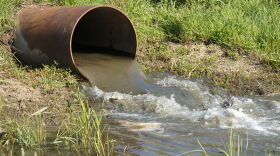 The U.S. Environmental Protection Agency is developing a new regulation to require public notices of combined sewer overflow discharges into the Great…
 -
 Waste water sludge is making its way to Michigan farms in the form of fertilizer pellets. The practice has not gone unnoticed in rural Lenawee County,…

© 2024 MICHIGAN PUBLIC
91.7 Ann Arbor/Detroit 104.1 Grand Rapids
91.3 Port Huron 89.7 Lansing 91.1 Flint
Play Live Radio
Next Up:
0:00
0:00
Available On Air Stations


